
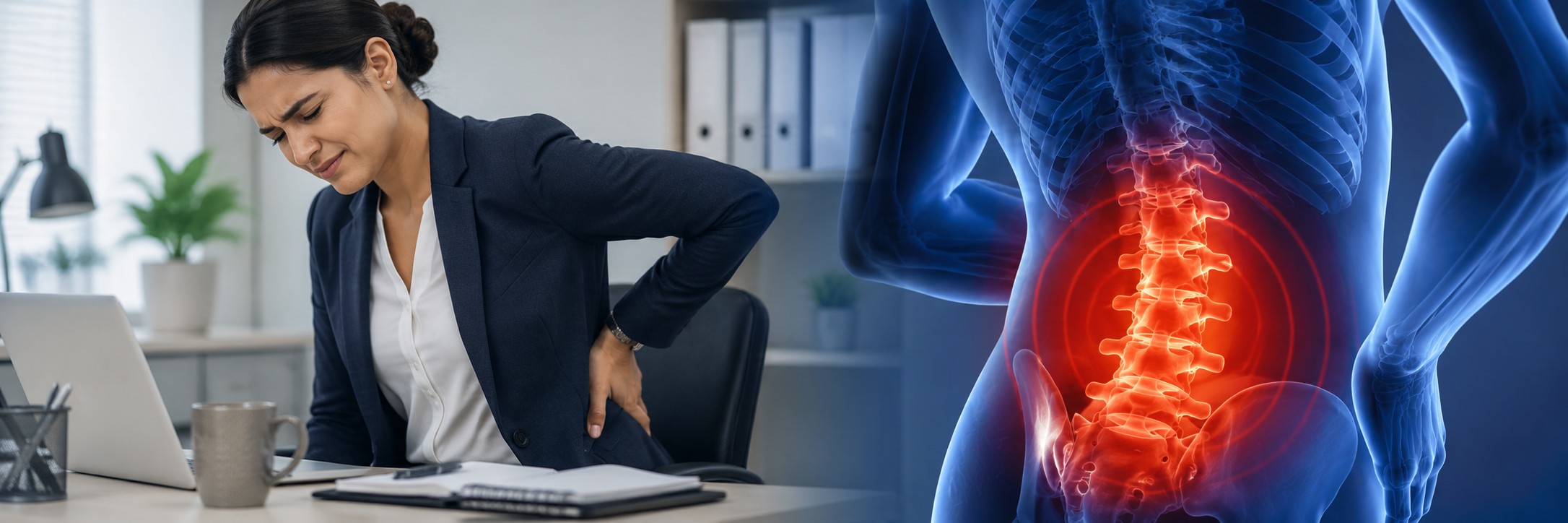
Back Pain Relief: How Physical Therapy Helps You Move with Confidence Again
By Priya Chauhan, MPT, Clinic Director, iCURE Physical Therapy
If your back catches when you stand from a chair, makes you hesitate before lifting your child, or sends pain into your leg, it is understandable to wonder whether something serious has happened. Severe pain can be frightening, but its intensity does not always reflect the amount of tissue damage. Most episodes of back pain are not caused by a dangerous condition. A careful examination helps separate common mechanical or nerve-related pain from the smaller number of problems that require medical attention.
In more than a decade directing spine rehabilitation, I have worked with people whose pain began yesterday and others who had been limiting their lives for years. The details vary, but the first goal is the same. You need a clear explanation of what may be contributing to your symptoms and a plan that helps you move forward safely. Clinical guidelines support exercise, education, and selected hands-on treatment as first-line care for many forms of low back pain [1][2].
Getting started. Many patients in Washington can schedule a physical therapy evaluation without a physician referral. Your first visit includes a detailed assessment of your symptoms, movement, strength, nerve function when appropriate, and the activities you want to regain. We then explain the findings and outline a plan built around your goals. Insurance requirements vary, and our team can help you verify your benefits before the visit.
Why Physical Therapy Can Help Back Pain
Back pain rarely has one identical cause in every person. Your symptoms may be influenced by irritated joints or nerves, changes in muscle coordination, reduced hip or trunk strength, stiffness, a sudden increase in activity, poor sleep, stress, or the effects of guarding and inactivity. When pain lasts for months, the nervous system can also become more sensitive, which may make ordinary movement feel more threatening than it is.
A physical therapy evaluation is designed to identify the factors that matter in your case. We assess how your back and hips move, how your trunk responds during bending and lifting, and how your nerves behave when pain travels into the leg. We also discuss which activities you have stopped or changed because of pain. Avoiding movement may feel protective at first, but prolonged fear of bending, lifting, or exercise can slow recovery and reduce confidence.
Your treatment plan follows the examination. Graded exercise rebuilds the strength, mobility, and tolerance required for work, sleep, household tasks, and recreation. Hands-on care may reduce pain or stiffness enough to help you participate more comfortably. Education helps you understand which symptoms are expected, which activities are safe to resume, and how to respond if pain fluctuates. A Cochrane review of 249 trials found that exercise therapy reduces pain and improves function for many people with chronic low back pain [3].
Can Physical Therapy Help You Avoid Surgery?
For many patients, physical therapy is an appropriate first step before more invasive treatment is considered. In a randomized trial involving lumbar spinal stenosis, structured physical therapy and surgical decompression produced comparable outcomes for many participants at two years [4]. This finding does not mean that rehabilitation replaces surgery in every case. It shows that a well-designed course of conservative care can be a meaningful option when there is no emergency and the diagnosis supports it.
Early physical therapy has also been associated with lower use of advanced imaging, injections, surgery, and opioid medication in people with low back pain [5]. That association does not guarantee a particular outcome, but it supports addressing the problem before pain, inactivity, and loss of confidence become more established. Surgery remains important for selected conditions, including progressive neurological weakness, loss of bowel or bladder control, or structural problems that require surgical management.
Get It Checked and Treat It Right
If back pain is affecting your sleep, work, walking, exercise, or ability to care for your family, you do not need to wait until it becomes unbearable. An evaluation is especially important when pain keeps returning, travels below the knee, or is not improving as expected.
Every first visit at iCURE begins with a screening for warning signs. We ask about recent trauma, fever, unexplained weight loss, severe unrelenting night pain, numbness in the saddle region, progressive weakness, and changes in bowel or bladder function. If your findings suggest that another medical professional should be involved, we coordinate that care promptly.
An early MRI is not necessary for many patients. Disc bulges and other age-related findings are common even in adults without back pain [6]. Routine imaging is generally reserved for severe or progressive neurological findings, suspected serious disease, or situations in which the result is likely to change treatment [7]. Many insurance plans, including Medicare, cover medically necessary physical therapy. Our team can help confirm referral and coverage requirements before you begin.
Back Pain Care at iCURE Physical Therapy – Lake Stevens
At iCURE Physical Therapy, your care is built around the life you want back. That may mean sleeping through the night, sitting through a workday, lifting without hesitation, returning to the gym, or walking with your family. We combine a detailed examination with progressive exercise, appropriate hands-on care, and clear guidance about what your back can safely do. If pain is beginning to make decisions for you, schedule an evaluation at our Lake Stevens clinic. Your first visit will give you a clearer understanding of the problem and a practical plan for the next step. No physician referral is needed in most cases in Washington, and we accept most major insurance plans. Call 425-458-7261 to schedule your evaluation.
What You Can Do Today
- Keep moving within a comfortable range. Short walks and regular position changes are usually more helpful than prolonged bed rest.
- Use a comfortable resting position for brief periods, such as lying on your back with your knees supported, but continue gentle activity during the day.
- Seek prompt medical care for new bowel or bladder changes, numbness in the saddle area, worsening leg weakness, fever with back pain, or pain after a significant accident.
References
- Academy of Orthopaedic Physical Therapy. Interventions for the Management of Acute and Chronic Low Back Pain: Revision 2021. Journal of Orthopaedic & Sports Physical Therapy, 2021. https://www.jospt.org/doi/10.2519/jospt.2021.0304
- Qaseem A, et al., American College of Physicians. Noninvasive Treatments for Acute, Subacute, and Chronic Low Back Pain: A Clinical Practice Guideline. Annals of Internal Medicine, 2017. https://pubmed.ncbi.nlm.nih.gov/28192789/
- Hayden JA, et al. Exercise Therapy for Chronic Low Back Pain. Cochrane Database of Systematic Reviews, 2021. https://pubmed.ncbi.nlm.nih.gov/34580864/
- Delitto A, et al. Surgery Versus Nonsurgical Treatment of Lumbar Spinal Stenosis: A Randomized Trial. Annals of Internal Medicine, 2015. https://pubmed.ncbi.nlm.nih.gov/25844995/
- Fritz JM, et al. Primary Care Referral of Patients with Low Back Pain to Physical Therapy: Impact on Future Healthcare Utilization and Costs. Spine, 2012. https://pubmed.ncbi.nlm.nih.gov/22614792/
- Brinjikji W, et al. Systematic Literature Review of Imaging Features of Spinal Degeneration in Asymptomatic Populations. American Journal of Neuroradiology, 2015. https://pubmed.ncbi.nlm.nih.gov/25430861/
- Chou R, et al. Diagnostic Imaging for Low Back Pain: Advice for High-Value Health Care From the American College of Physicians. Annals of Internal Medicine, 2011. https://pubmed.ncbi.nlm.nih.gov/21282698/
Frequently Asked Questions (FAQ)
Q: Should I get an MRI before starting physical therapy?
A: Usually not. Imaging is most useful when warning signs are present, surgery is being considered, or recovery is not progressing as expected. Your examination helps determine whether an MRI is likely to change the plan.
Q: Is it safe to exercise when my back hurts?
A: For most people, carefully selected movement is safe and useful. Your therapist identifies a starting point that fits your symptoms and increases the challenge as your back becomes more tolerant.
Q: What happens at the first visit?
A: We review your symptoms and medical history, assess movement, strength, and nerve function when needed, and discuss the activities you want to regain. You leave with an explanation of the findings and a recommended plan.
Q: Do I need a physician referral in Washington?
A: Many patients can begin physical therapy without a referral. Some insurance plans have separate requirements, so our team can help verify your benefits before treatment.
Q: When is back pain an emergency?
A: Seek urgent or emergency care for new bowel or bladder problems, numbness in the saddle area, worsening leg weakness, fever with back pain, or pain after a significant accident.
This article provides general education and does not replace an individualized evaluation, medical or rehabilitation advice. Seek prompt care when symptoms are severe, worsening, or accompanied by warning signs.